Case studies / Mobile commerce & administration
Selleva
The storefront is only one part of the store.
A commerce product in development, bringing a Flutter storefront, Laravel API, and Filament catalog tools into one system. The goal: a considered shopping experience with practical tools behind it.
Explore the project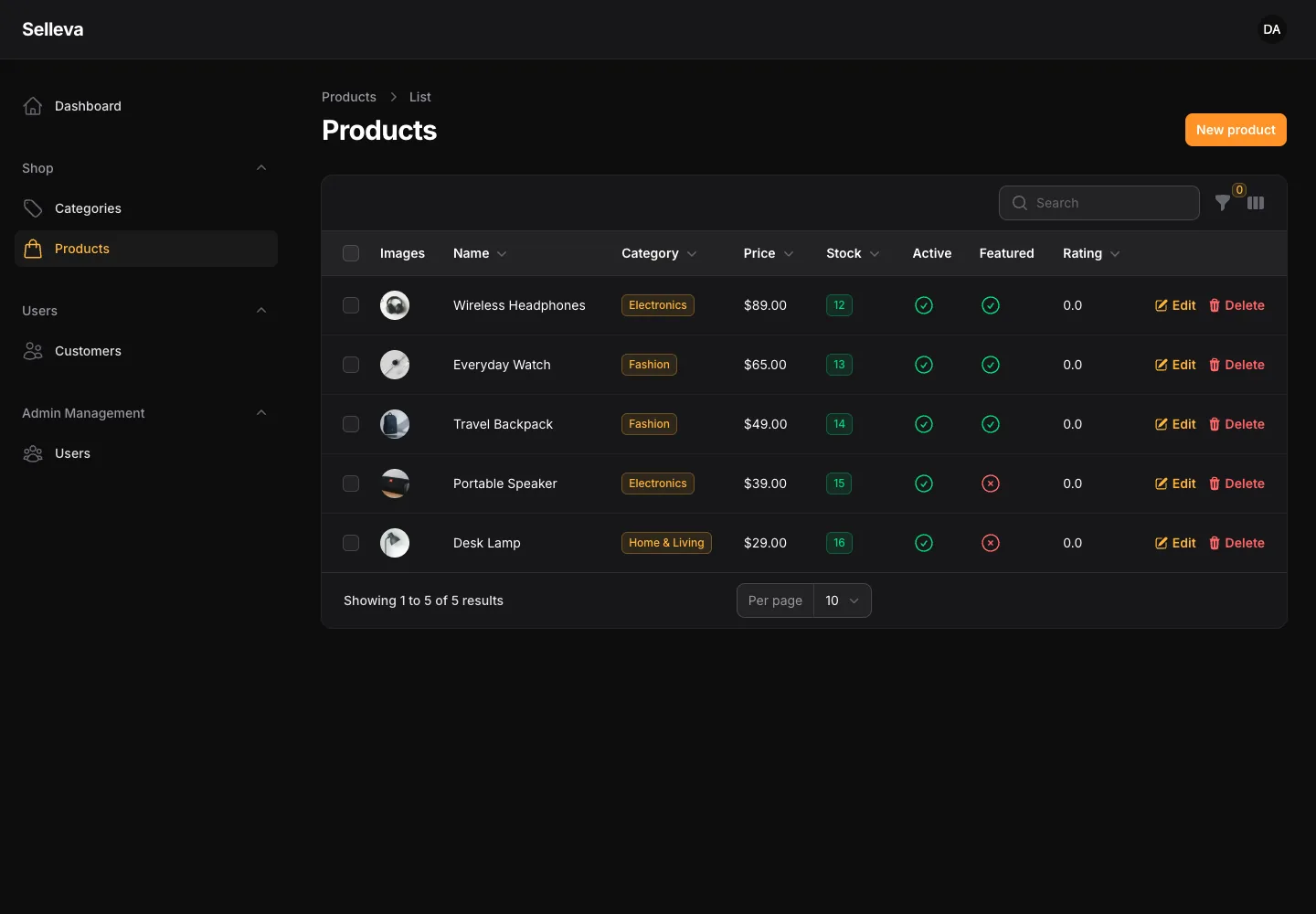
Local demo
- Designed & developed by
- Mohammad Shams
- Contribution
- End-to-end design and development
- Core technologies
- Flutter
- Laravel
- Filament
Founder-owned portfolio project; not presented as a Teqaniyah client engagement.
Local demo
Inside the product
Captured from locally running applications with fictional demo data. Names, requests, prices, and dashboard counts are examples—not customer records or business results.
The storefront direction
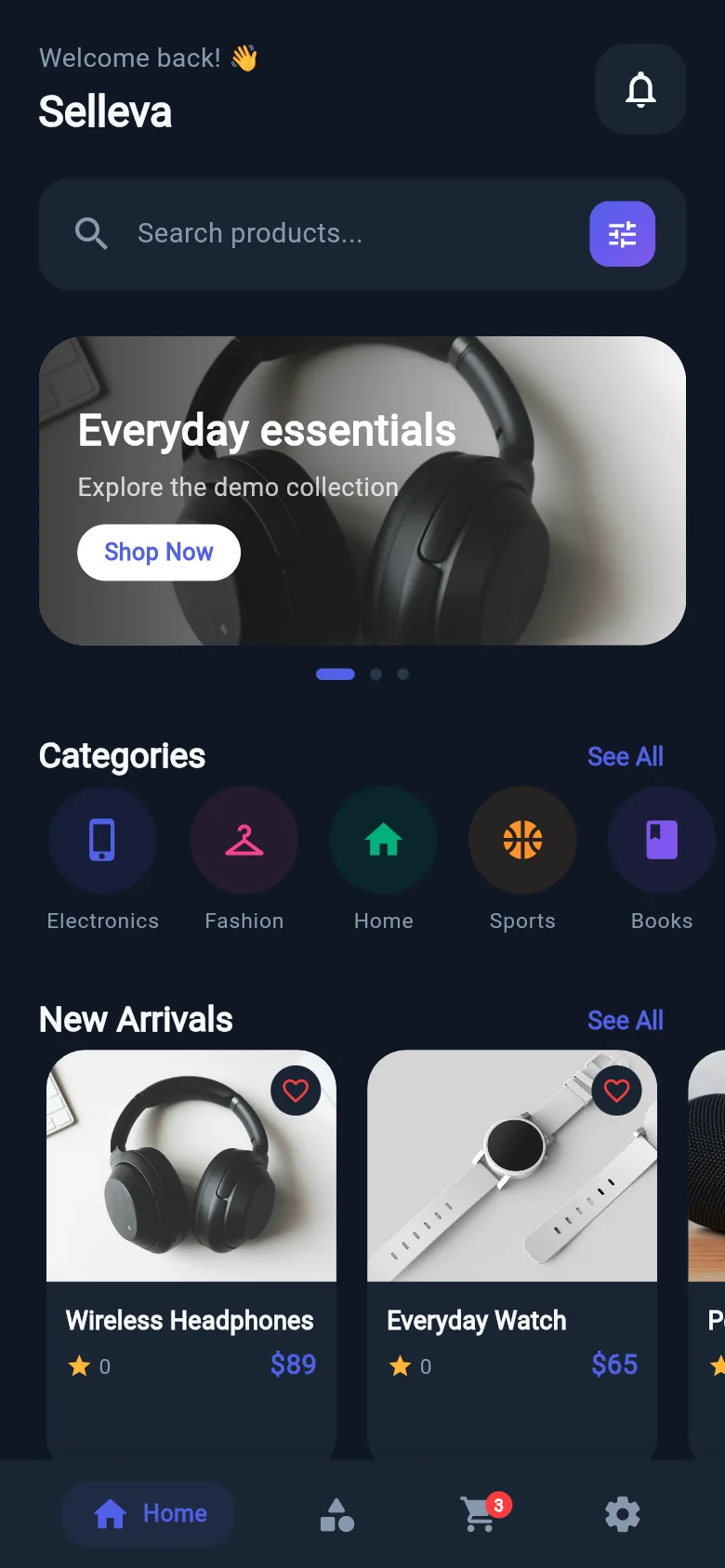
Home-screen prototype with the new working name and fictional catalog fixtures. Stock product photos are used for demonstration.
From the API to the product
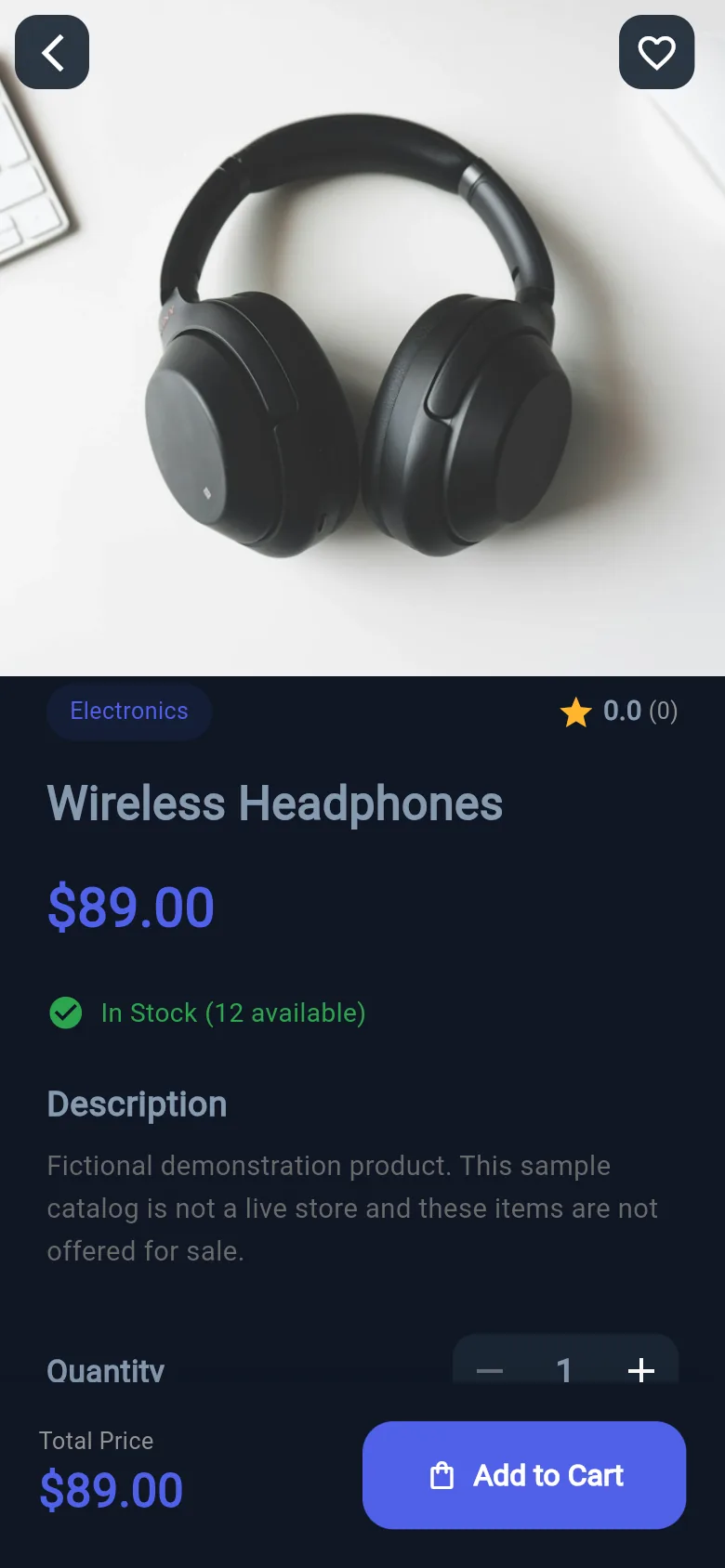
Product details from the local Laravel API, after a numeric-parsing fix in the capture copy. The catalog is fictional; the basket action is not yet connected to persistent cart state.
A basket interface in progress
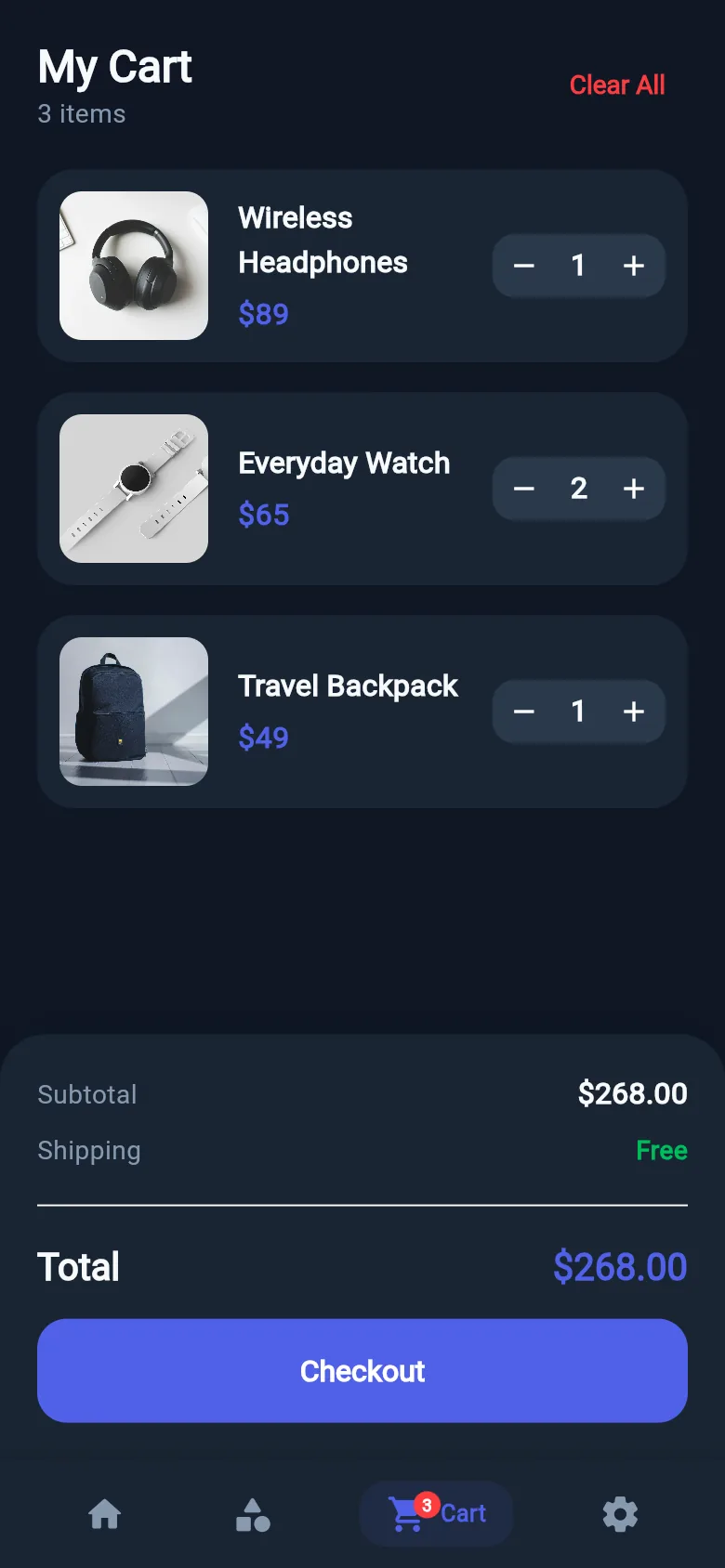
Fixture-based cart prototype. Prices, totals, and shipping text are examples; the checkout control does not represent completed payment processing.
Tools behind the storefront
Authenticated Filament catalog management backed by a fresh local database. Products and inventory are fictional.
Overview
A shopping application needs more than a product grid. Customers need ways to browse, inspect, and save products; the people managing the catalog need their own tools for products, categories, and accounts.
The project separates customer interactions from administrative operations while connecting both to the backend. Browsing, authentication, cart, and wishlist features each have a place in the source structure.
Selleva is the working name for this founder-owned product, previously called Shop. The public repository still uses shop. It is being developed as a product, not presented as an operating retail business.
The user journey
Discover products
Product and category repositories support catalog browsing, product details, search parameters, pagination, featured products, and new arrivals.
Build toward a connected basket
Customer-authenticated API routes provide cart operations and wishlist toggling. The mobile home feed and cart currently use prototype data; wiring those screens to persistent selections remains part of development.
Manage the catalog
Filament resources provide administrative interfaces for products, categories, customers, and users. Separate admin routes cover catalog changes and notifications.
What was built
Flutter storefront
The mobile source organizes authentication, home, categories, product details, cart, and settings into feature areas. A shared navigation shell connects the main screens.
Laravel backend API
Public product and category endpoints sit alongside separate customer and admin authentication groups. Protected routes cover customer selections and administrative changes.
Filament administration
Catalog and account resources live in the backend alongside the API. This gives the project an administration layer as well as a customer-facing interface.
Behind the interface
- FlutterCustomer-facing screens
- Laravel APIProducts, accounts & selections
- FilamentCatalog & account administration
- Browse products
- Laravel API
- Manage catalog
One repository, distinct responsibilities
The mobile/ and backend/ directories separate the Flutter application from the Laravel implementation. Product repositories in the app translate API responses into product and category models.
A product-led visual system
The mobile theme defines indigo and purple accents, light and dark surfaces, rounded inputs, and reusable component styles. This study borrows those colors for its catalog-and-system illustration.
Scope & evidence
Selected screens were run locally from the public source: customer sign-in, API-backed product details, the storefront and cart prototypes, and authenticated Filament product management. The isolated capture copy uses the Selleva name, a web-compatible API adapter, fictional catalog fixtures with stock photos, and a numeric-parsing correction for Laravel’s decimal strings. That correction still needs to be applied to the source project.
Development remains active. The mobile home feed and cart are fixture-based; the cart badge is a placeholder and the product-detail Add to Cart action currently displays a message rather than saving a basket. No live retail launch, payment processing, completed checkout, sales, customer counts, or conversion results are claimed.
Explore the evidence
Building something with similar needs?
Tell us about your users, workflows, and integrations. We can discuss the right scope for your product.